David Puerto, smiling, in sunglasses and a dark zip jacket

David Puerto · Design engineer · Apple · Microsoft · Meta

I build the thing before it exists.

US-based, AI-native design engineering. I prototype in the medium it will ship in, so the right people can decide early.

Approach

I take calculated risks, and I build systems based on trust.

Every project starts like a climb: an objective, partners, systems for mechanical advantage, and an eye on the forecast.
Before this, by hand. Like an artisan.

Shipped inside the big rooms.

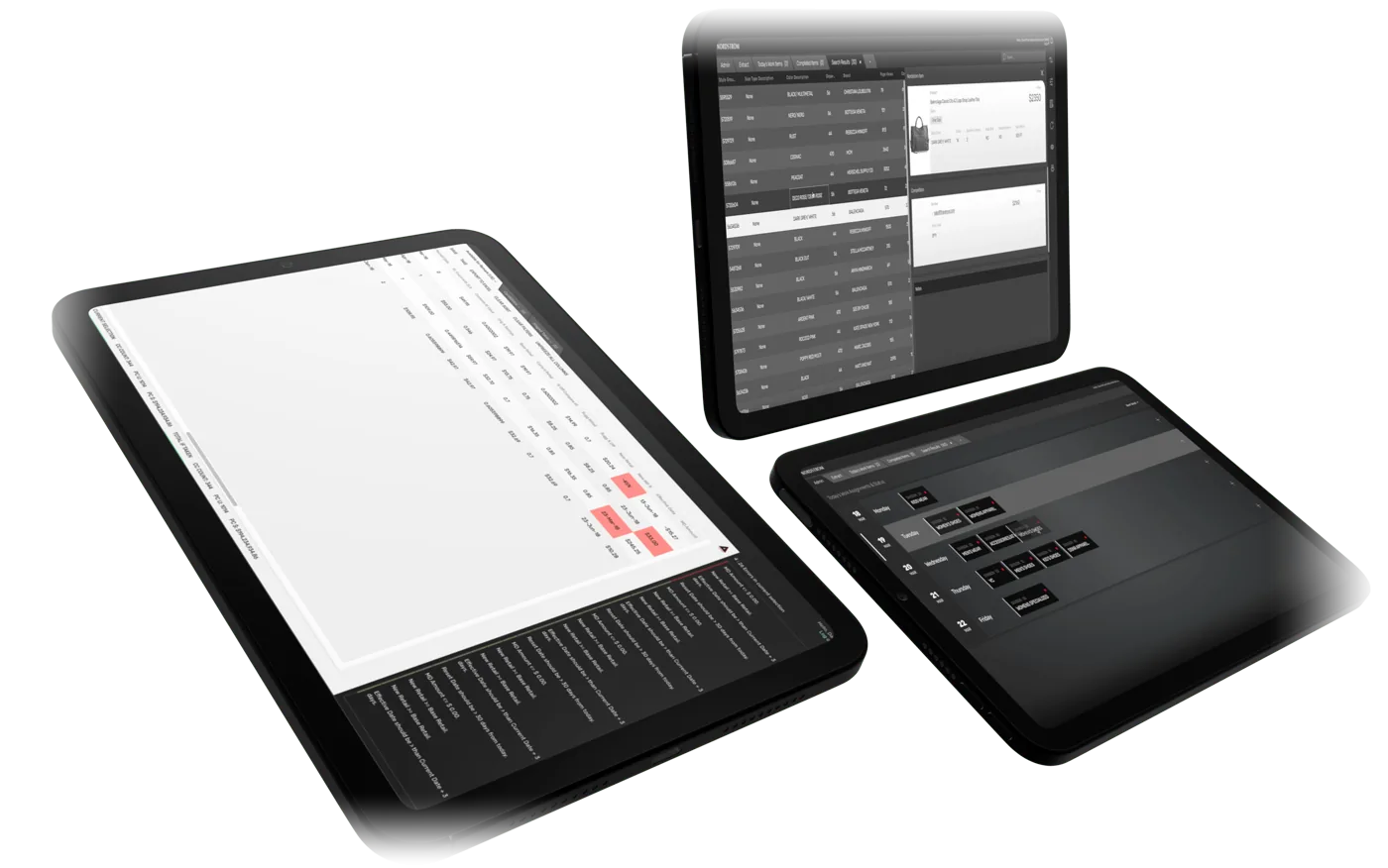
  • ∞ 1dashboards collapsed into one surface
  • 12h 20mweekly executive reporting
  • 40+teams adopted the email composer, no mandate
  • No Figmazero trust ruled it out, so Preview Sites were built in the browser
  • No codea factory: brief to working preview, tracked in ADO
  • 12+projects built from the Preview Sites blueprint
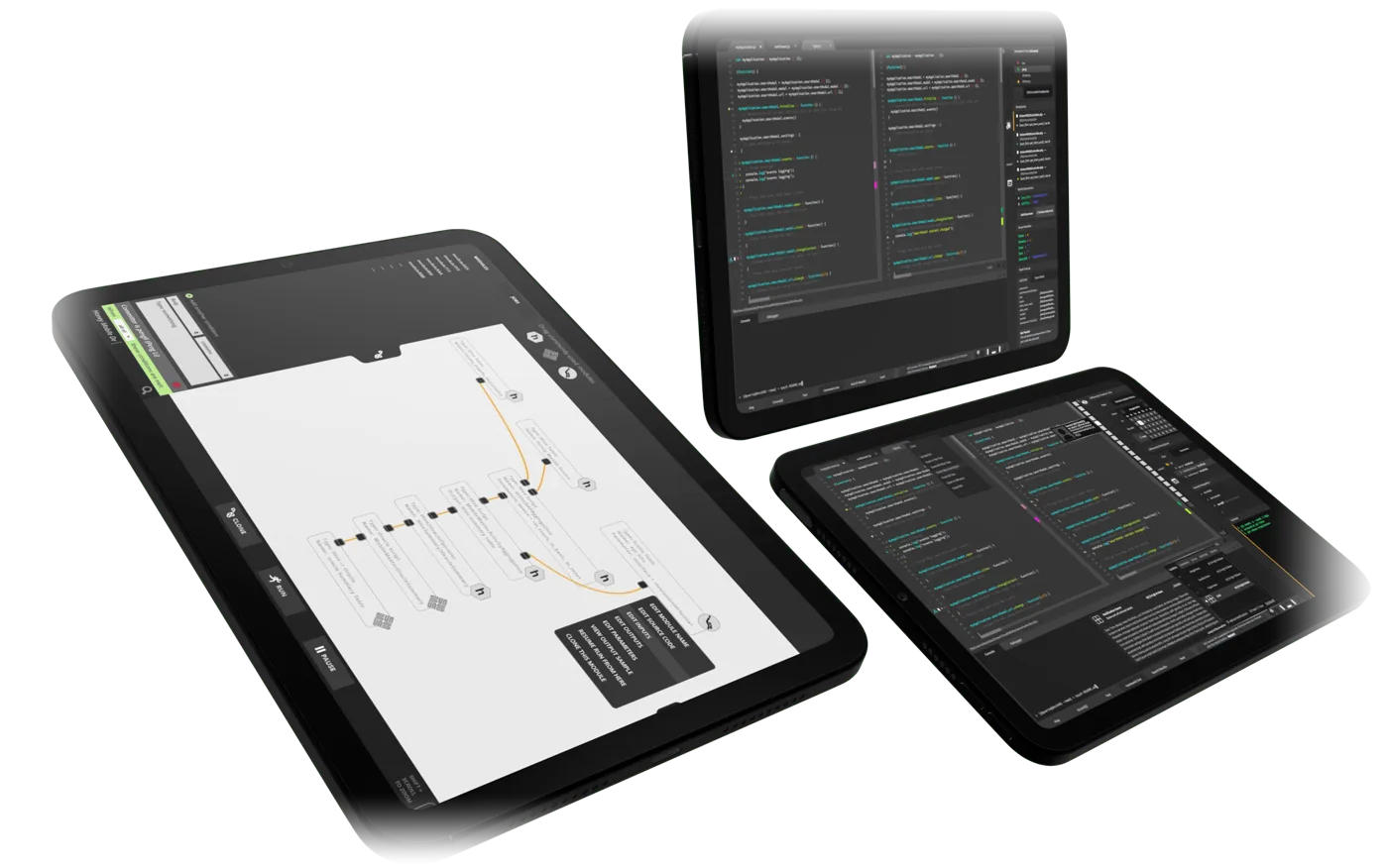
  • 0 installsa cloud IDE on the Facebook platform
  • 1000sof Facebook engineers who loved it
  • Lyric Nuclideshipped for Atom and VS Code
  • 100%execution status achieved
  • 0 1CompIntel, built from nothing
  • CommonUIthe design system it gave rise to
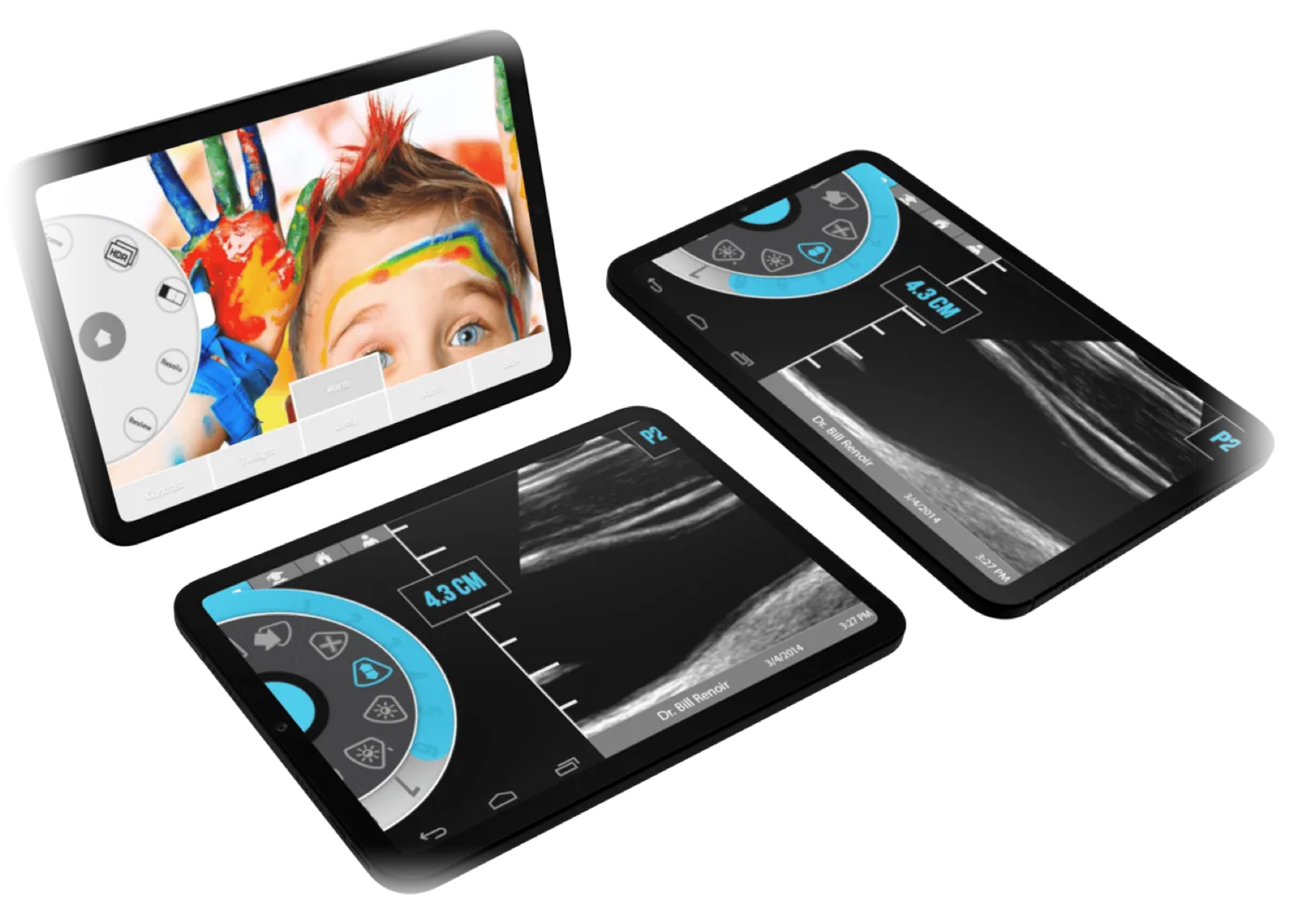
  • 1sthandheld ultrasound device
  • GestureUI, prototyped with industrial designers
  • Tricorderthe brief: Star Trek, for real
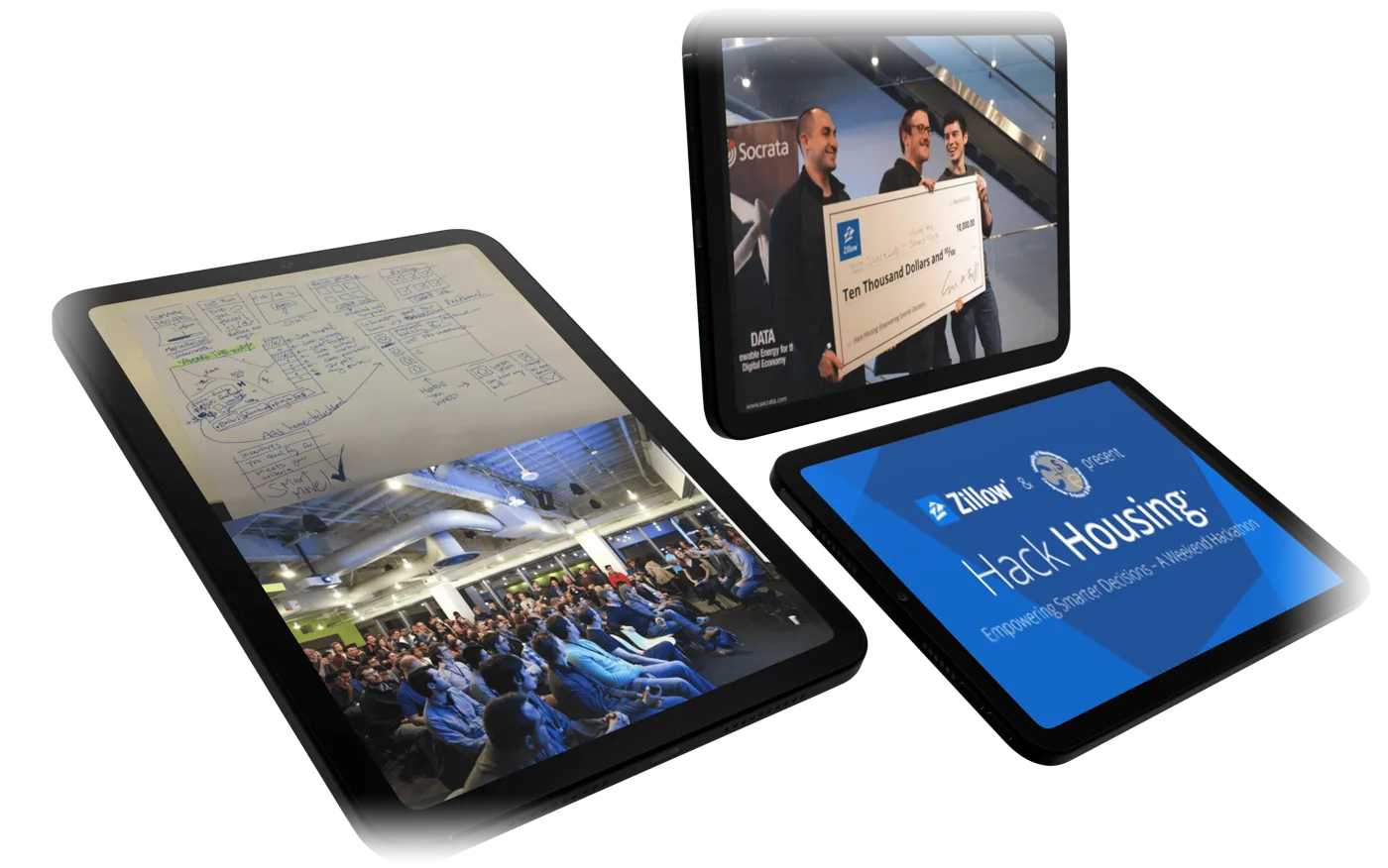
  • 1stplace at #hackHousing, Seattle's largest hackathon
  • 3people on the team
  • Dozensof hidden home-buying programs surfaced

How I work with AI

It's a belaytionship.

AI is my thinking partner. I trust it, and before every pitch we check each other's knots and harness. Every impasse is still a decision a person makes.

It supports me pushing the grade.

Me whipping on Walking on Sunshine. NOT AI.
  1. Agent On belay? Plan ready for review.
  2. David Belay on. Approved, with changes.
  3. Agent Climbing. Building it.
  4. Agent Falling! A check failed.
  5. David Got you. Caught, fixed, run again.

What I'm building now, after hours Corporate work

Built in my own studio.

GenAI studies

Drawn first, filmed last.

How the templates reach Platinum: one reference, studied frame by frame, built drawn, then given generated film made for the layout.

David smiling on the snow ridge below Illumination Rock, Mount Hood, at sunrise on the summer solstice, climbers along the ridge behind him
Illumination Rock, Mount Hood. Summer solstice. NOT AI.
  1. 01ReferenceOne, named up front
  2. 02StudyTracked frame by frame
  3. 03DrawnIt works with no film
  4. 04FilmedShot for the layout

Research

Two studies, twelve templates.

  • InkA door opens, and ink takes the room as you scroll.
  • SignalA design language where every mark has a job.

Twelve site templates, made the same way.
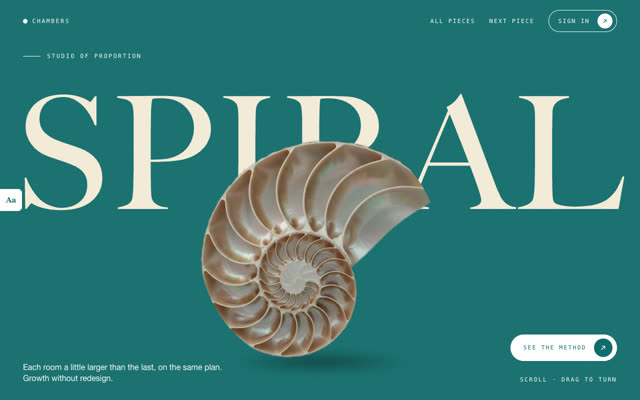
  • The Spiral template’s opening screenSpiral
  • The Night Shift template’s opening screenNight Shift
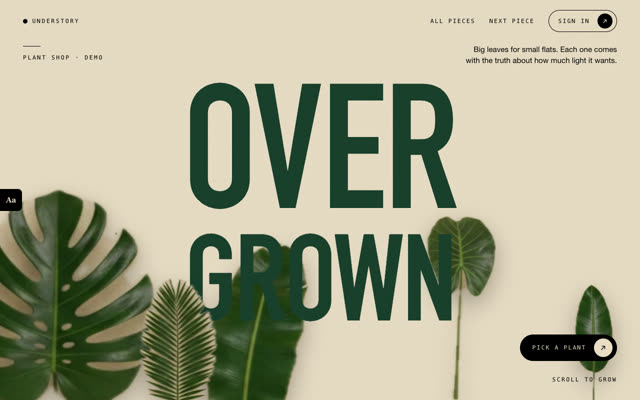
  • The Over Grown template’s opening screenOver Grown
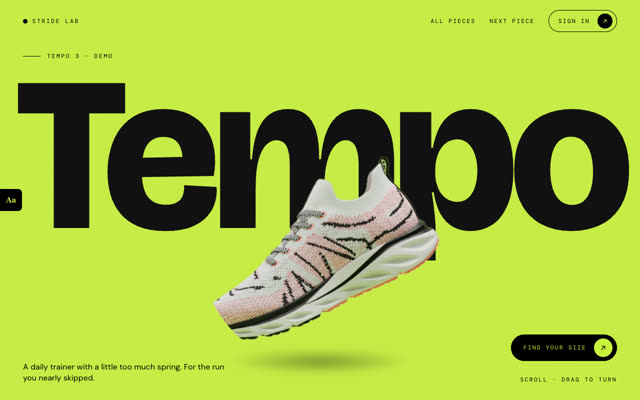
  • The Tempo template’s opening screenTempo
  • The First Light template’s opening screenFirst Light
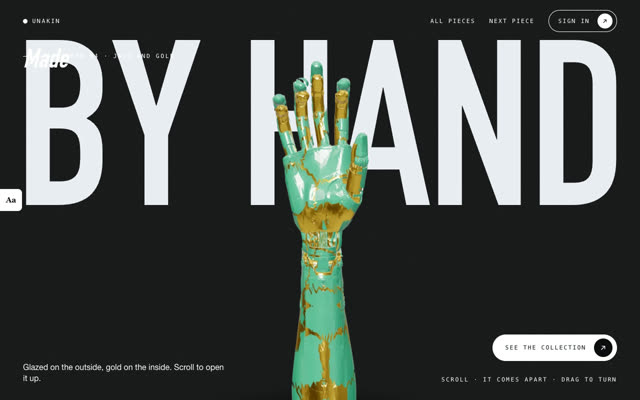
  • The By Hand template’s opening screenBy Hand
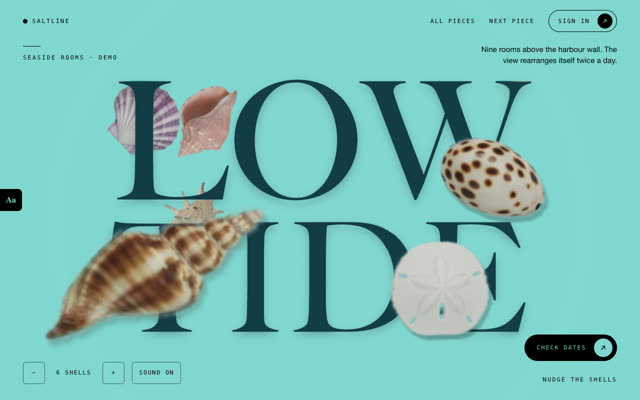
  • The Low Tide template’s opening screenLow Tide
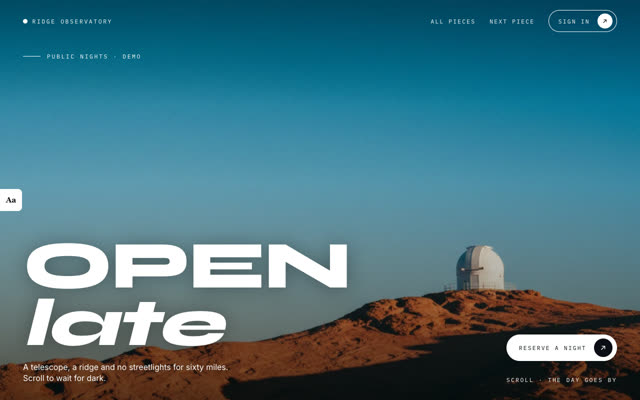
  • The Open Late template’s opening screenOpen Late
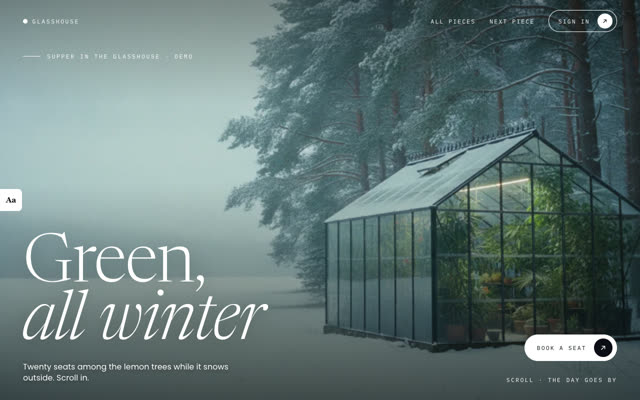
  • The Green, All Winter template’s opening screenGreen, All Winter
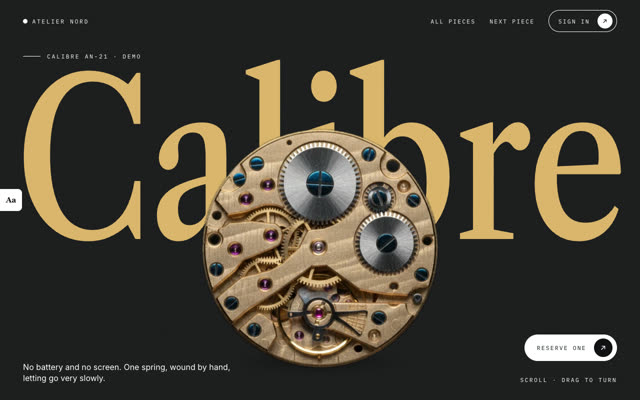
  • The Calibre template’s opening screenCalibre
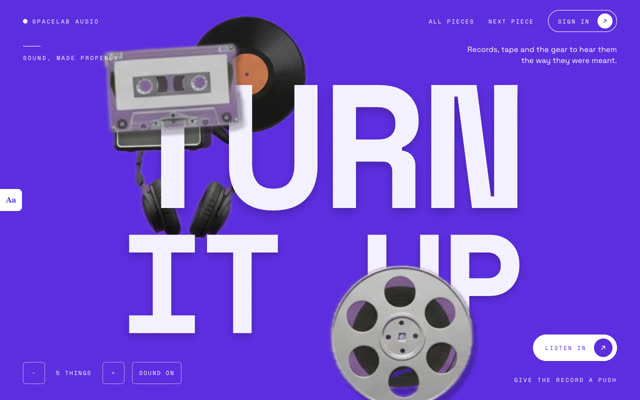
  • The Turn It Up template’s opening screenTurn It Up
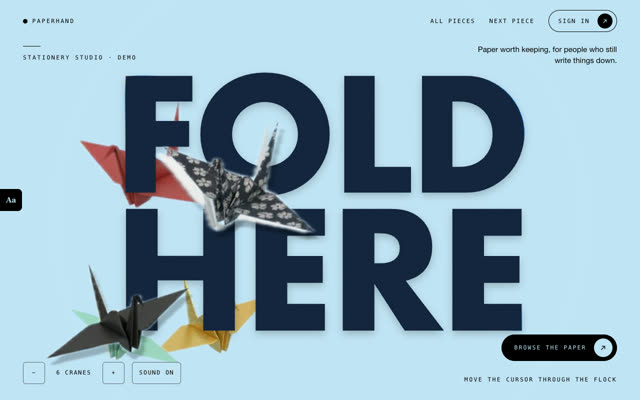
  • The Fold Here template’s opening screenFold Here

Power tools

Yes, one human with real judgment can direct your entire studio.

The season

The last six months, training for the next objective.

    Commits per week from GitHub.

    Hard work got us up here. Now the fun part. NOT AI.
    Let's take calculated risks and send it together.

    Climb on.

    Research · Ink

    A door opens, and ink takes the room.

    Ink is a cinematic site kit from the studio. The page is a set, and scrolling moves through it.

    It went the way 06 describes: one reference, studied frame by frame, drawn so it works with no film at all, then given generated footage directed and cut for the layout.

    A studio kit. Walkthroughs on request.

    Research · Signal

    Every mark has a job.

    Signal is a design language from the studio: frames, directions, loops and ratios, each one doing a single thing on the page.

    A studio kit. Walkthroughs on request.

    KEXP · a web component, a browser extension and a desktop app

    The best radio station on earth, in one tag.

    It started with Reddit threads of people struggling to stream KEXP outside the official site. I asked the KEXP team, and they gave me permission to use their API and pointed me at a better stream.

    One dependency-free web component streams it live, shows what’s playing, and keeps the songs you heart on the flip side, with album art and DJ notes. The same code runs as a browser extension and a desktop app.

    Open the full player   Support KEXP

    Live audio from KEXP 90.3 FM, used with their permission.

    Spacelab Audio · Mixer · the Mac app, 1 min

    Two decks, and AUTO for the next record.

    AUTO picks the next record by tempo and key, then beat-matches it and blends it in over sixteen bars. The faders and the EQ move on their own, and a record that has already played shows struck through in the library.

    By hand, it has every control of an expensive DJ controller: two decks or four, EQ and filters, key lock, hot cues, a crossfader, and headphone cueing with its own booth output. Auto beat-matching makes every blend seamless, and AUTO is yours to train. It plays to the same speakers as the rest of Spacelab Audio.

    And it’s a party. Anyone can host one: friends join from their phones to request records, upload their own and talk in an encrypted chat, and every phone can become a speaker. The set can go out as worldwide radio.

    The crate map: 2,595 records as glowing points on a wheel, key around the edge and tempo from the centre out, coloured by key, with tonight's two records ringed and a trail between them
    The crate map. Key around the wheel, tempo from the centre out, energy as brightness, and tonight’s trail through it, so what fits next is right there.

    Try the web design study

    Spacelab Audio · Speakers · the Mac app, 48 s

    Different brands, one clock.

    One tap on PLAY EVERYWHERE puts every speaker in the house on one clock: AirPlay 1 and AirPlay 2, Sonos, with older Sonos grouped under a newer one so a gen-1 Playbar plays in step with a B&W, and Bluetooth.

    It streams to Apple TV and smart TVs too, and plays whole-home Dolby surround.

    Every speaker can be equalized and adjusted on its own, its level, EQ and timing, and Spacelab Audio syncs them automatically when they need it. Headphones, this Mac and phones join as speakers too, and AUTO keeps the next record coming.

    Mygration · the pairing, with the app's own ripple

    It moves your setup, not your files.

    Bring two Macs together and your setup migrates: repos, dev tools, secrets and your AI agent's memory. One shows a PIN, you type it on the other, and the app's own NameDrop ripple runs between them.

    Then it rebuilds natively, Intel to Apple Silicon: repos clone, Homebrew installs arm64, secrets stream over a PIN-keyed encrypted channel, and about eighty behavioral probes check the new Mac behaves like the old one. Done means an empty diff.

    Secrets live only in the Keychain or that channel, never on disk in transit and never in a cloud.

    The pairing, recorded from a web port of the app's ripple shader. The full film is in the works.

    Shipmate · deploys and ops, by voice

    It refuses, it counts, it speaks first, and only then it ships.

    Shipmate is the deploy and ops assistant I built for my own fleet of eight live sites: say "deploy this" in the terminal, to Siri in the car, or into the Claude app, and it plans the change, shows the cost, and ships to DigitalOcean or Vercel.

    The interesting part is the authority model: nothing reaches production without a single-use grant from a plan step, every push is guarded, and every decision lands in a ledger I judge by hand.

    It also speaks first, watching every site for downtime, failed deploys, expiring certificates and security drift, briefing me at 7:30, and answering questions asked into Even G2 glasses that can look but never ship.

    Demo data only. The full film, from the car, is in the works.

    UNAKIN · Chapter One · The Climb, 90 s

    From words on a page to a world you climb.

    It started as a storyboard, all text. Then a simple 2D district that runs in a browser, so players could tell me what worked in days, not months. That is the left half of the card.

    Underneath is a narrative state engine: an append-only log of what happened, a constitution of rules for what may happen, and characters whose beliefs can differ from the truth. Nothing writes the world directly; everything is a proposal that passes the gates.

    With that feedback in hand, we went full steam into WebGL: Chapter One, The Climb, drawn in ink and narrated. That is the right half, and this film.

    A browser game in progress.

    UNAKIN Studio · the November tester email, made in the studio

    The brief went in. The campaign came out.

    It began as Spacelab Studio, an AI email studio. This is a real email, sent to Spacelab Audio’s testers: “You said it. We built it.” The studio designed it in conversation with Claude, generated its hero film and images, and checked it against the mail clients that would break it.

    It sends one person at a time, only after you’ve approved a test to yourself, with live polls inside the email. Every send is tracked, delivered, opened, clicked, bounced or complained, and a bounce or a complaint takes that person off the list on its own. Recipients keeps the people, the lists and each person’s timeline.

    It grew into the place a few brands make their pitch pages, storyboards, game characters, 3D and worlds, each kept with its history in one library. Every Claude revision shows what it cost, so the spending calls are made on numbers.

    The site templates come from the same studio. A piece is a format, a subject, a colour, a typeface and a few lines of copy, about ten lines in one recipe file, and dependency-free web components and a builder do the rest. The builder makes Bronze; Platinum is by hand, with a person on every frame. This site is one of them.

    Claude Code sessions work through it too, leaving notes and proposals that wait for a person to confirm. Next, it builds and runs whole sites the same way, in Spring 2027, under UNAKIN.

    From the lab

    Try the sandbox   unakin.com

    UNAKIN Chess · The first meeting, 20 s

    Play the house in the ink room.

    A dark room with my graffiti in gold and pieces in bone and ink, under Edison bulbs. You play the house by mouse, touch or keyboard, at a level you choose, or two players on one screen.

    Switch on hand control and your webcam follows one hand: MediaPipe's hand tracking runs in the browser only, and the video never leaves the device.

    Everything is keyboard and screen-reader friendly: arrow keys move a cursor, Enter picks up and puts down, and every move is announced.

    Sedulous · the teaser, the app and the watch

    The mentor plans it. The watch sees it through.

    A mentor plans the training, the athlete does it with a watch on, and the mentor sees what actually happened: claimed against verified.

    One guided session with the same screens, colours and words on Apple Watch, Wear OS and Garmin. It coaches pace and heart-rate zone live, counts laps on a track, runs strength set by set with rest that ends early once heart rate drops, and asks how it went after every part, so a dead watch loses nothing.

    When the AI mentor adjusts a day, the reason comes first and the human mentor decides.

    Demo data only.

    Preview Sites · walkthrough, 3 min

    A factory that proves it before it ships.

    It started in 2020 as previews I built by hand, live in the browser, because zero trust ruled out Figma. Now it runs end to end.

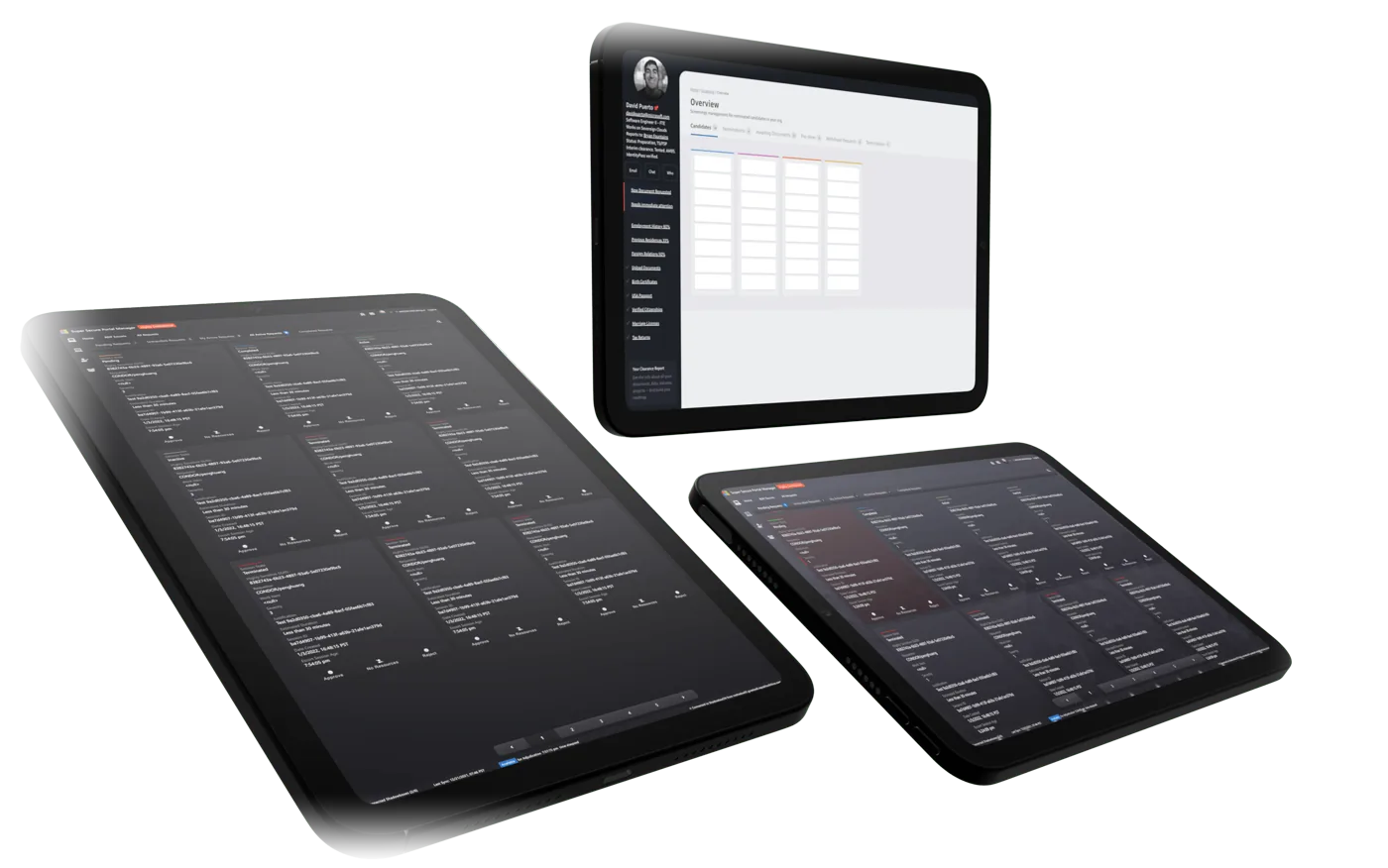
    Give it a mockup, a sketch or a brief and it builds a working preview. A gate holds every screen to the bar before anything ships: parity with the design, the design system, accessibility. Each screen is linked to its story in Azure DevOps.

    Then it works the preview into any codebase. It reads the repo for its engineering style and doctrine, and documents, writes the tests and opens the pull requests the way that team would.

    All data shown is mock.